
Why AS9100D Matters Beyond Aerospace and Defense
What a higher-level quality management system can mean for any OEM program
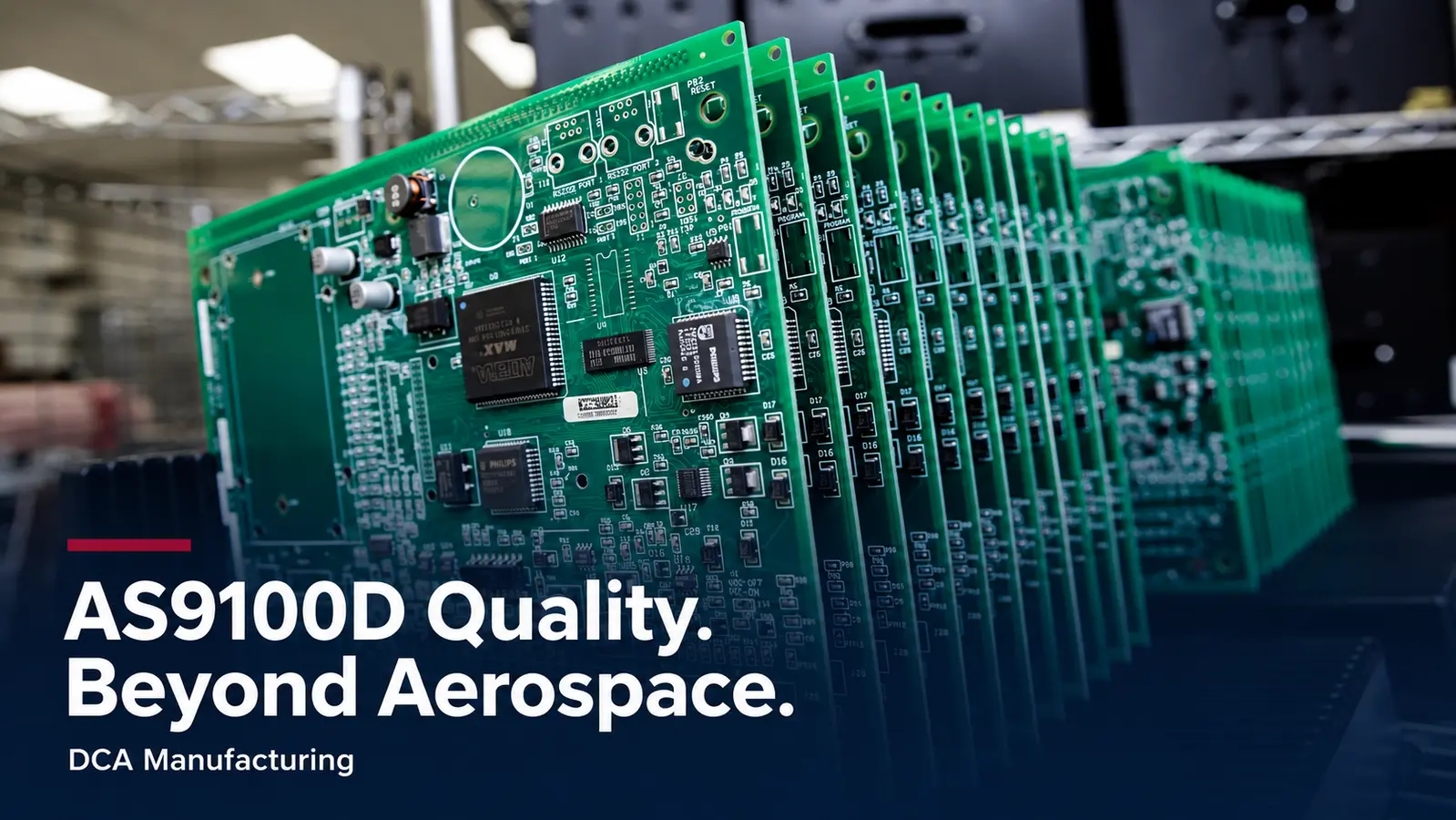
When an electronics manufacturing services (EMS) provider earns AS9100D certification, the immediate association is aerospace and defense. That association is fair: the standard was developed for organizations supporting aviation, space, and defense supply chains. But the discipline behind an AS9100D quality management system can matter just as much to OEM teams in industrial, medical, automotive, power and energy, and emerging technology applications.
For a non-aerospace customer, the point is not that every program should be treated as an aerospace program. The value is a manufacturing partner that operates within a structured quality system while remaining flexible enough to apply the customer’s actual requirements for documentation, validation, traceability, testing, and change control.
DCA recently announced its AS9100D certification. View the certification documents and applicable scopes.
AS9100D is a system standard, not a product promise
AS9100D is a quality management system standard. It establishes requirements for how an organization manages processes, risk, documentation, performance, corrective action, and continual improvement. It does not certify an individual product, replace a customer’s specification, or mean that every build requires the same records and controls.
That distinction is especially important in contract manufacturing. OEM programs vary widely. The right manufacturing plan is established with the customer, based on the product, market, quality obligations, release maturity, and downstream use of the assembly.
Does AS9100D add unnecessary overhead?
Not when the quality system is applied to the needs of the program. A common misconception is that aerospace-quality discipline automatically means an expensive, overly burdensome process for every build. At DCA, the purpose is not to apply every aerospace control to every program. It is to establish and execute the level of documentation, validation, traceability, test, and change control the customer requires. That structure can help prevent avoidable rework, delay, and risk created by unclear requirements, uncommunicated changes, or issues found too late in the process.
A quality system driven by the customer program
requirements
execution
feedback
improvement
Customer requirements guide the depth of documentation, validation, test, traceability, and production controls.
What non-aerospace customers can take from AS9100D
Clearer alignment to customer requirements
A quality system should make customer requirements easier to understand, communicate, and carry through the manufacturing process. For an OEM, that can mean earlier conversations about what is required for a release package, inspection, documentation, validation, functional testing, packaging, and traceability.
A disciplined approach to changes
Programs evolve. Parts change, requirements are clarified, and production conditions shift. A disciplined quality system supports documented review and communication of changes so the manufacturing process can stay aligned to the released requirements.
Evidence-based improvement when issues arise
No manufacturing environment is immune to issues. The important question is how the team responds. A structured quality system supports investigation, corrective action, and learning that can help prevent the same issue from recurring.
Scalable discipline without a one-size-fits-all process
The goal is not to impose unnecessary aerospace-style documentation on every industrial or commercial program. The goal is to use a capable system to execute the level of control the customer needs, from prototype and validation builds through scalable production.
How the value looks across OEM markets
| Market context | Practical relevance of the quality system |
|---|---|
| Industrial and Automation | Consistent execution, documented changes, component risk discussions, and quality requirements aligned to the OEM program. |
| Medical and Healthcare | A structured quality foundation alongside the program-specific controls and documentation required by the customer. |
| Automotive | A disciplined manufacturing foundation that complements automotive customer requirements. |
| Power and Energy & Emerging Technology | Support for evolving designs, customer-defined validation plans, traceability needs, and scalable production requirements. |
Flexible does not mean informal
DCA’s quality systems are designed to support customer requirements, not force every customer into the same template. Pilot builds are determined by the customer, often in partnership with their quality team. Functional testing is defined around the most realistic practical scenario: it may occur before an assembly moves into a larger build, or it may be a complete end-of-line functional test. Traceability is likewise established upfront according to the customer’s needs.
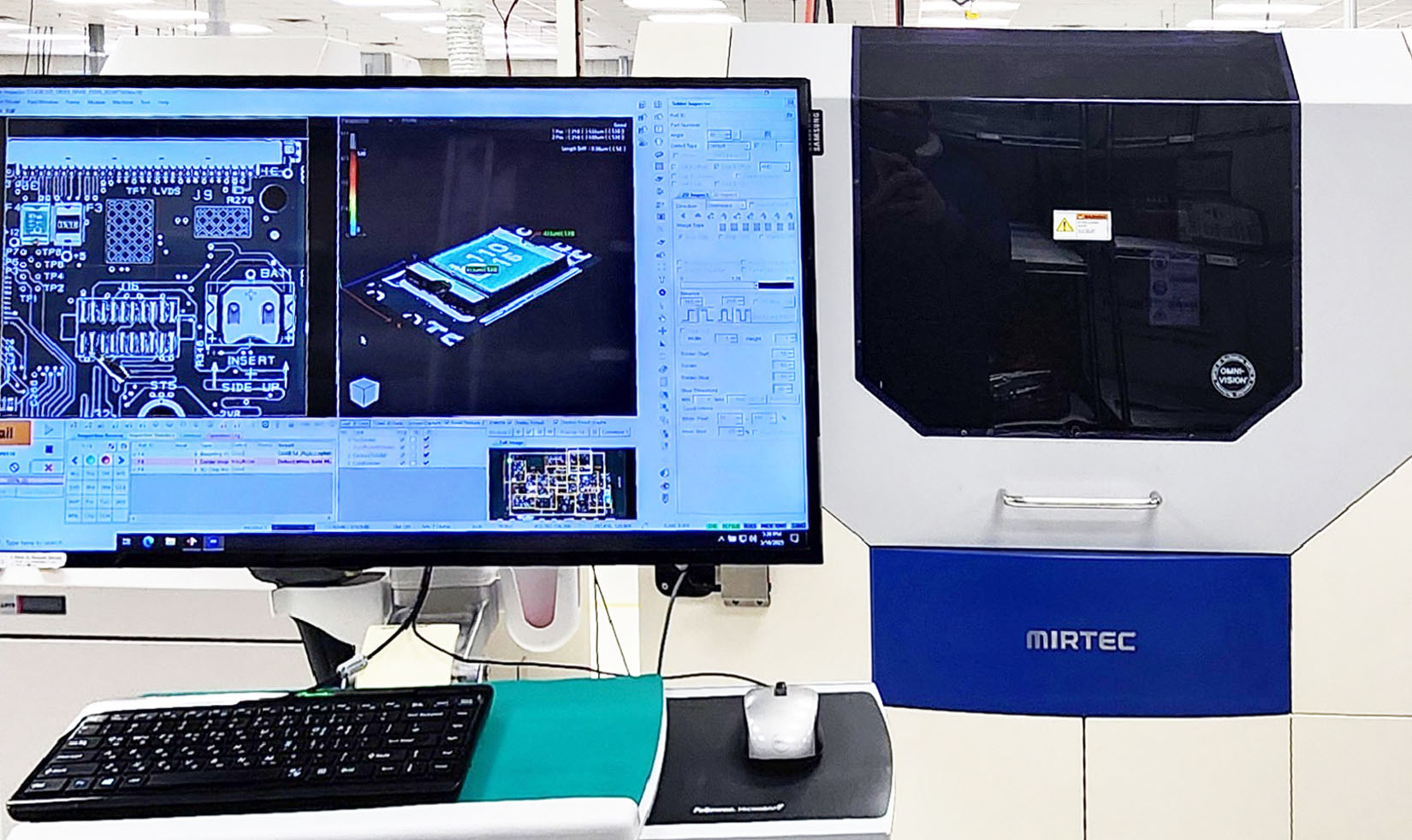
DCA uses FactoryLogix from Aegis to support program-specific traceability and documentation needs. The depth and type of data captured should reflect the customer’s requirements and the product’s intended application.
The question for OEM teams is not only which certification a supplier holds
In a PCB Directory interview, DCA Manufacturing CEO Upinder Singh put the point simply: “A certificate on the wall does not manufacture a good product.” The value of a standard is reflected in the way a manufacturer works with the customer: how requirements are understood, how processes and changes are controlled, how issues are addressed, and how traceability is maintained when the program requires it.
AS9100D gives DCA an aerospace-quality framework. For non-aerospace customers, the practical value is not a label. It is a disciplined quality system that can be tailored to the documentation, traceability, validation, functional test, and production requirements of the program.
Read the PCB Directory interview with Upinder Singh.
Talk through your program requirements
Whether you are moving from prototype and validation builds into production or transferring an existing program, talk with DCA about the manufacturing, supply chain, quality, documentation, and functional test requirements that matter to your program.
Continue the Conversation
Talk with DCA about your supply, quality, NPI or production challenge.