
5 Ways to Prepare for PCBA Parts Shortages
It is a ripple effect: one missing assembly can hold up an entire product. One board can hold up an assembly. One missing part can hold up a board. In printed circuit board assembly (PCBA), finding a replacement is only the start. It still needs to work in your product and meet your quality requirements.
Our tariffs blog offered a simple tip: qualify alternates before they become urgent. That means finding, testing and approving backup parts before you need them. Start during design, try them in prototypes and plan for approvals before production. These five steps can help.
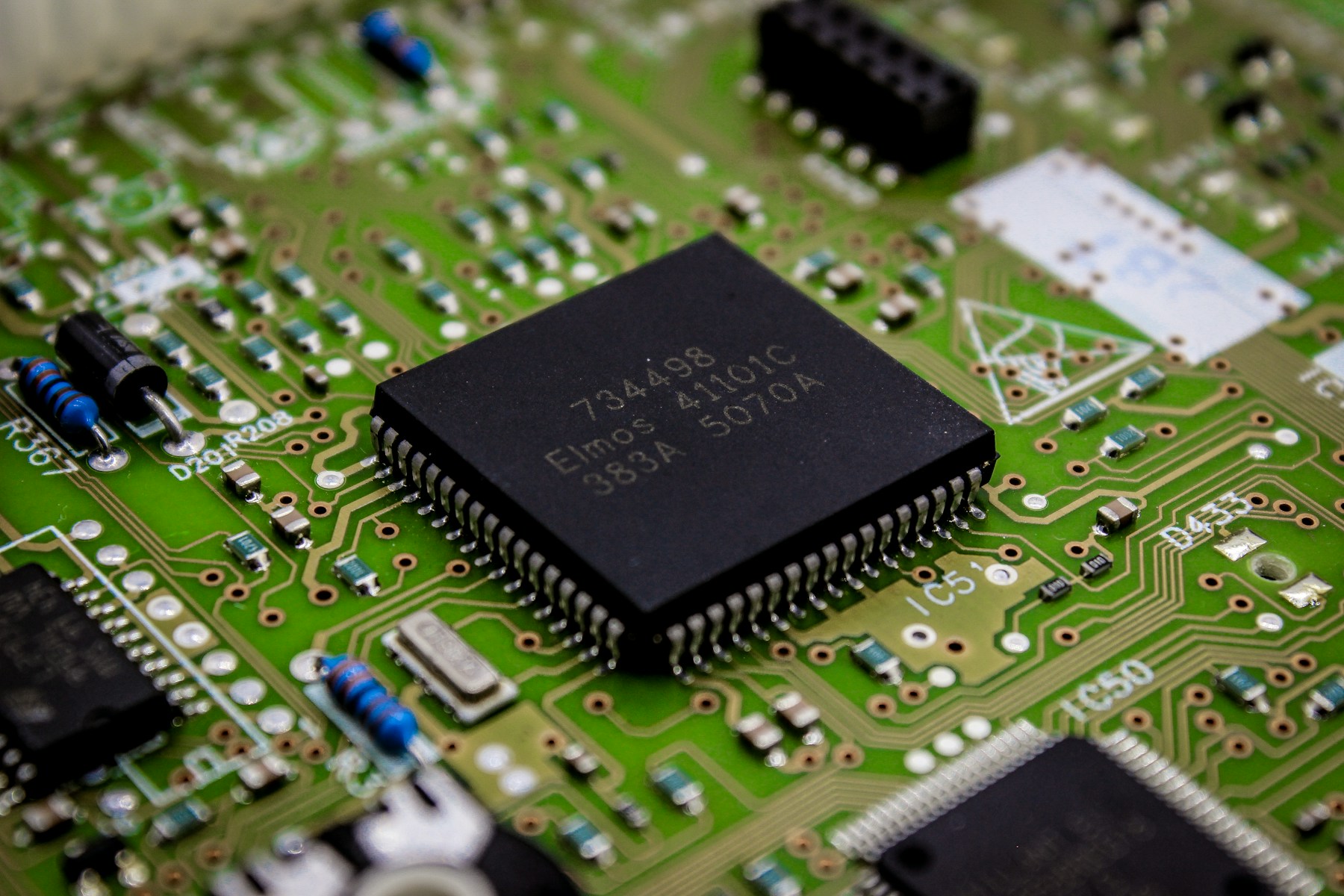
1 Spot the parts that could stop a build
Start while the board is being designed. Ask which parts would be hardest to replace. Common resistors and capacitors, known as passive parts, often have more replacement options. Active parts, such as processors and control chips, can require changes to software or the board itself. Even a passive part needs review for its role in your product.
2 Find a backup before the design is set
Ask engineering and purchasing to check options together. Does the part fit the job? Can you buy enough from the manufacturer or an authorized distributor? ECIA explains how authorized sourcing helps trace parts back to their maker and reduces exposure to counterfeit or mishandled parts. [1] Add potential backups to the bill of materials (BOM), or parts list, and mark them as pending until approved. [2]
3 Try it early
A part that looks right on paper may behave differently in your product. Where practical, test backups in prototypes. Check that the board can be built, tested and used as intended. Finding a problem now leaves more time to fix it. A suggested replacement is not an approved replacement. For related support, explore DCA’s manufacturing and test engineering capabilities.
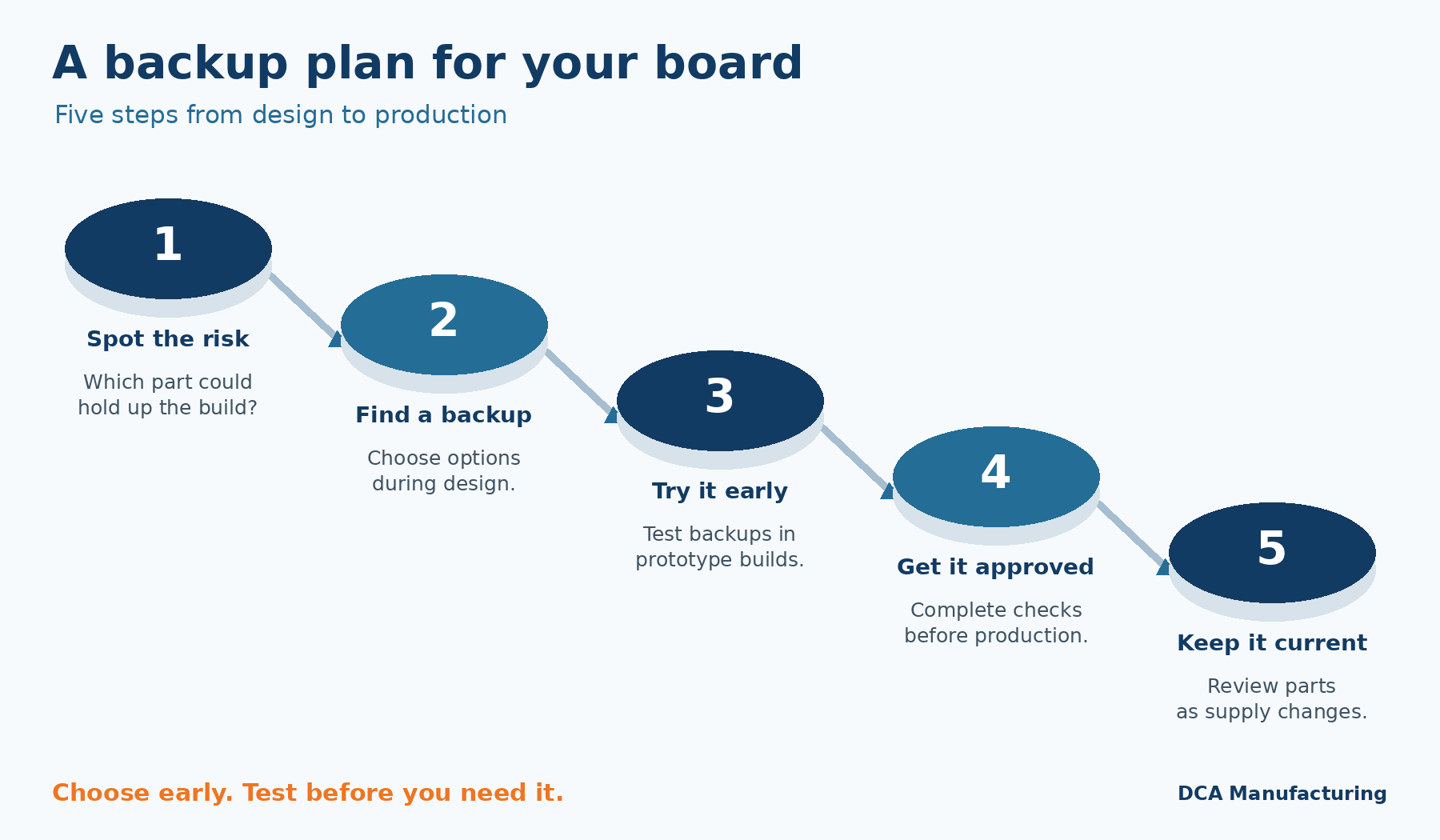
4 Get approvals before production
Plan for backup parts when setting up product tests and any required certification. Agree on the checks each change needs before it can be used. Record test results and approvals. Early testing can reduce repeat work, but required checks still apply.
Keep exact part numbers and manufacturers in your parts list. During certification planning, ask the certification body whether approved minimum and maximum limits, such as electrical ratings and temperature range, can allow suitable alternatives. This may provide flexibility if a backup also becomes unavailable. Those limits and options must be accepted in the certification file. A part that meets the limits may still need review, testing or recertification.
5 Keep the list current
A backup can become hard to buy, too. Review stock, delivery times and notices that a part will no longer be made. In March 2026, Z2Data reported that many discontinued parts in its 2025 analysis had no accompanying manufacturer change notice. [3] Check backups regularly and keep the approved list current.
Plan Your Next Prototype and Production Build with DCA
Explore DCA’s quick-turn PCBA prototyping capabilities for design validation, early testing, and faster time to market. From initial prototype builds and alternate-part evaluation to the transition into volume production, DCA can support your project through the full manufacturing lifecycle. Share your BOM, quantities, Gerber files, due dates, and applicable quality requirements to get started. Request a Quote.
Sources
1. ECIA, The Authorized Channel: Why It Matters Now More Than Ever — June 2026.
2. Altium, How to Prevent Electronic Component Shortages and EOL Components from Derailing Electronic Product Development — updated June 26, 2025.
3. Z2Data, Components Are Going EOL Without Product Change Notifications at Alarming Rates — March 13, 2026.
Continue the Conversation
Talk with DCA about your supply, quality, NPI or production challenge.